Source Exhaust Recirculation Pcv Valve for Air Conditioner, Telescopic Handler, Aerial Platform
Explore 30 listings for the exhaust recirculation pcv valve suitable for air conditioners, telescopic handlers, and aerial platforms. Buyers can compare specifications like pressure ratings, flow rates, and certifications to find the right component for their hydraulic or engine systems.
Key considerations
Products List


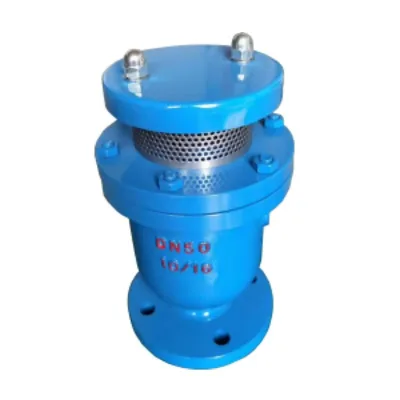


$44.20 - $60.00
Moq: 1


Comprehensive Sourcing Guide
Strategic Sourcing Guide for Exhaust Recirculation PCV Valves
Navigating the global market for exhaust recirculation PCV (Positive Crankcase Ventilation) valves requires a disciplined approach to technical verification and supplier evaluation. The core keyword "exhaust recirculation pcv valve" often encompasses a diverse array of components, ranging from simple atmospheric vents to complex hydraulic and pneumatic control units. Buyers must distinguish between generic valve types and specialized recirculation systems designed for specific engine architectures. The following guide outlines the critical factors for sourcing these components, grounded in observed market data and technical realities.
Technical Specifications and Model Variability
The technical landscape for exhaust and crankcase ventilation valves is defined by significant variability in model numbers, flow capacities, and pressure ratings. Observed product data reveals a wide spectrum of specifications that buyers must align with their specific machinery requirements. For instance, specific models such as the LS-LGLQ and W12V190.03.02 indicate distinct engineering profiles, while others like the TM412 and QEV-08 suggest specialized applications in hydraulic or pneumatic systems.
When evaluating technical specifications, the maximum pressure and flow rate are paramount. Data indicates that certain high-performance units can withstand pressures up to 420 Bar with a maximum flow of 120 L/Min. These figures are critical for applications involving telescopic handlers and aerial platforms, where hydraulic systems operate under extreme conditions. Conversely, other units may be designed for lower pressure environments, utilizing connection modes such as internal threads with standard sizes like 1/8, 1/4, 3/8, and 1/2 inches.
The media compatibility is another vital technical parameter. While some valves are explicitly rated for oil media, others may be designed for air or mixed gas applications. The distinction between "Self-Operated" types and those requiring external pilot control or manual control forms dictates the integration complexity. Buyers must verify whether the valve requires a fixed displacement pump match or if it functions as a standalone unit. Furthermore, the physical dimensions, such as the 69cm45cm50cm standard noted in certain listings, must be cross-referenced with the available space in the target equipment to ensure a proper fit.
Compliance and Certification Verification
In the industrial valve sector, certification serves as a primary indicator of quality and regulatory compliance. The market data highlights that ISO certification is a common attribute among suppliers, suggesting a baseline adherence to international management standards. However, buyers should look beyond generic ISO claims to verify specific industry certifications. For example, certain product lines explicitly list CE, CCC, CCCF, GS, and GB8013-2005, which are essential for operations in China and the European Union.
Additionally, environmental compliance is increasingly critical. Standards such as ROHS and REACH are frequently cited in product attributes, indicating that the materials used in the valve construction meet restrictions on hazardous substances. This is particularly relevant for exhaust systems where material leaching or emissions are a concern. The presence of CE and RoHS certifications on specific models like the EV series suggests a commitment to safety and environmental standards.
Buyers must exercise caution when interpreting certification claims. The presence of a certification label does not automatically guarantee that every unit in a batch meets the standard. It is imperative to request valid certificates of conformity for the specific batch being purchased. Furthermore, the "Nonstandard" designation found in some product entries suggests that custom engineering may be required, which could impact the certification process. In such cases, buyers should verify if the custom design has undergone specific testing to meet the required safety and performance standards.
Cost Drivers and Pricing Dynamics
The pricing structure for exhaust recirculation valves is influenced by a complex interplay of factors, including material costs, manufacturing complexity, and certification requirements. The observed price range in the market spans from $0.02 to $1,000, reflecting the vast difference between simple atmospheric vents and high-pressure hydraulic control valves. This wide disparity underscores the importance of defining precise technical requirements before soliciting quotes.
Several key drivers influence the final cost. First, the maximum pressure rating and flow capacity significantly impact the price. Valves capable of handling 420 Bar and 120 L/Min naturally command a higher price point due to the robust materials and precision engineering required. Second, the type of control mechanism, such as pilot control versus manual control, adds to the complexity and cost. Third, customization availability is a major cost factor. While many suppliers offer "Available" customization, the engineering time and tooling required for non-standard models like the TM412 or specific thread configurations will increase the unit price.
Packaging and logistics also play a role in the total cost of ownership. Products listed with "Plywood Box," "Wooden Case," or "Strong Plywood Box" packaging are typically higher-value items requiring robust protection during transit, which adds to the overall cost. In contrast, items with "OPP Bag Packing" or "Carton" packaging are generally lower-cost, standard components. Buyers should factor in the Minimum Order Quantity (MOQ) as a cost driver. The observed MOQ range of 1 to 50,000 units means that small-batch buyers may face higher per-unit costs, while large-volume purchasers can leverage economies of scale.
Typical Applications and Industry Segments
Exhaust recirculation valves are integral to a wide range of industrial applications, from automotive engines to heavy machinery. The product data explicitly links these valves to specific sectors, including telescopic handlers and aerial platforms. These applications demand high reliability and the ability to withstand harsh operating environments, often involving hydraulic power systems and high-pressure conditions.
In the context of air conditioning systems, valves are utilized to manage airflow and pressure, ensuring efficient thermal regulation. The attribute "for Air Conditioner" highlights a specific niche where precise flow control is necessary. Similarly, the "Heating Type Exhaust Valve" suggests applications in heating systems where temperature regulation is critical. The versatility of these components is further demonstrated by their use in various connection modes, from internal threads to flanged connections, allowing them to be integrated into diverse machinery.
The "Matching: Fixed Displacement Pump" attribute indicates that these valves are often part of a larger hydraulic circuit, working in tandem with pumps to manage fluid dynamics. This integration is common in construction equipment and agricultural machinery. Buyers should also consider the "Oil" media specification, which points to applications in lubrication and hydraulic systems where the valve must resist degradation from oil exposure. Understanding the specific application context is essential for selecting the correct valve model, as a mismatch can lead to system failure or inefficiency.
Supplier Evaluation and Geographic Considerations
Evaluating suppliers requires a thorough assessment of their geographic location, production capabilities, and track record. The product data identifies several key manufacturing hubs in China, including Jiangxi, Hebei, Jiangsu, Ningbo, and Jinan. Each of these regions may have specialized clusters of manufacturers, with some focusing on general industrial valves and others on specialized hydraulic components.
When evaluating a supplier, buyers should verify their origin and production capacity. For instance, a supplier located in Hebei may specialize in high-pressure valves with standards like DN40-DN500, while a Ningbo-based manufacturer might focus on smaller, precision components with ROHS and REACH compliance. The "Customization: Available" attribute suggests that many suppliers are willing to adapt their products to meet specific buyer needs, but this requires a robust engineering team and flexible production lines.
Buyers should also assess the supplier's ability to handle different order sizes. The wide MOQ range indicates that some suppliers cater to small businesses with low-volume orders, while others are geared towards large-scale industrial contracts. It is crucial to confirm the supplier's lead time and capacity to meet delivery schedules, especially for custom orders. Additionally, the presence of multiple certifications (CE, CCC, GS, etc.) suggests a supplier with a mature quality management system, which is a positive indicator of reliability.
Quality Control and Long-Term Procurement
Ensuring long-term supply chain stability requires a rigorous quality control (QC) strategy. The observed "Quality: Good" attribute is a starting point, but buyers must implement their own verification processes. This includes requesting test reports, material certificates, and inspection records for each batch. For valves with high-pressure ratings, hydrostatic testing and flow rate verification are essential to confirm performance claims.
Long-term procurement considerations also involve the availability of spare parts and after-sales support. Suppliers offering "Standard Package" or "Universal" standards may provide better long-term support due to the widespread adoption of their designs. Conversely, non-standard models may require custom tooling for repairs, which could lead to longer lead times for replacements. Buyers should establish clear communication channels with suppliers to address any quality issues promptly.
Furthermore, the "Pallet" and "Strong Plywood Box" packaging options suggest that the supplier is prepared for international shipping, which is a key factor in maintaining supply chain continuity. Buyers should verify that the packaging meets international shipping standards to prevent damage during transit. Finally, maintaining a relationship with suppliers who offer "Customization" can provide a competitive advantage, allowing for tailored solutions that improve the efficiency and reliability of the buyer's equipment over time.
Comparative Analysis of Valve Specifications
To facilitate informed decision-making, the following table summarizes key technical attributes observed in the market for exhaust recirculation valves. This comparison highlights the diversity in specifications and helps buyers identify the most suitable options for their specific needs.
| Attribute Category | Specific Observation | Relevance to Buyer |
|---|---|---|
| Model Number | LS-LGLQ, W12V190.03.02, TM412, QEV-08, EV | Identifies specific engineering profiles and compatibility. |
| Pressure Rating | Up to 420 Bar | Critical for high-pressure hydraulic systems. |
| Flow Capacity | Up to 120 L/Min | Determines throughput efficiency in fluid systems. |
| Connection Type | Internal Thread (1/8" to 1/2"), DN40-DN500 | Ensures physical fit with existing piping. |
| Media Compatibility | Oil, Air | Verifies material resistance to operating fluids. |
| Control Method | Manual, Pilot, Self-Operated | Defines integration complexity and automation needs. |
| Certifications | ISO, CE, CCC, RoHS, REACH, GB8013-2005 | Indicates regulatory compliance and quality standards. |
| Origin Locations | Jiangxi, Hebei, Jiangsu, Ningbo, Jinan | Helps assess logistics and regional specialization. |
| Packaging | OPP Bag, Plywood Box, Wooden Case, Carton | Impacts shipping costs and product protection. |
| MOQ Range | 1 to 50,000 Units | Influences inventory strategy and unit pricing. |
By carefully analyzing these attributes, buyers can navigate the complex market for exhaust recirculation PCV valves with confidence, ensuring they select components that meet their technical, regulatory, and operational requirements.
FAQs
What certifications are available for exhaust recirculation pcv valves?
ISO certification is commonly available for these valves. Some specific models also carry CE, CCC, CCCF, GS, and GB8013-2005 certifications to ensure compliance with international safety and quality standards.
How is the maximum pressure rating determined for these valves?
High-performance units can withstand pressures up to 420 Bar. This rating is critical for applications involving telescopic handlers and aerial platforms where hydraulic systems operate under extreme conditions.
Which packaging types are used for shipping these valves?
Products are shipped in OPP bags, cartons, plywood boxes, wooden cases, or on pallets. The packaging type often correlates with the value and fragility of the specific valve model being sourced.
Can buyers request customization for exhaust recirculation pcv valves?
Yes, customization is available for many models. Buyers can request specific dimensions or thread configurations, though non-standard designs may require additional engineering time and tooling costs.
What is the typical minimum order quantity for these valves?
The minimum order quantity ranges from 1 to 50,000 units depending on the supplier. Some models have specific MOQs like 500 pieces, while others allow for smaller trial orders.
Which locations are the primary manufacturing hubs for these valves?
Manufacturers are located in Jiangxi, Hebei, Jiangsu, Ningbo, and Jinan in China. Each region may specialize in different valve types, such as high-pressure units or precision components.